
Call-out fee: $80–$180
What most Sydney plumbers charge to attend. Ask for it on the phone. Anyone who will not name it is telling you something.
The first thing that happens is not a booking. It is a plumber telling you what to shut off right now, because the minutes before anyone arrives are where most of the damage is either done or prevented.
The honest test is whether it is still getting worse while you wait. Water, waste or gas going somewhere it should not, and not stopping. A burst pipe, sewage backing up into the shower, a hot water tank emptying through the ceiling, or any smell of gas: those are emergencies, and waiting until morning multiplies the damage bill.
Then there is the category people apologise for calling about: the only toilet in the house blocked, no hot water with a newborn, a drain backing up the night before an inspection. Call anyway. An after-hours call here reaches a plumber, not a promise of one tomorrow.

A tank or heat pump mounted where it copes with salt-laden air works harder for its life than the same unit further inland. Casings corrode, the sacrificial anode goes sooner than the manual suggests, and failure arrives earlier than the warranty implies.
A leaking tank under pressure is not something to open up. Shut its cold-water isolation valve if you can reach it safely, and leave the rest to the visit.
Narrabeen’s sandy soils pour into any cracked pipe or open joint, forming compacted plugs in stormwater and sewer lines that only jetting can shift.
Fine sand washes and blows into stormwater pits and lines and settles wherever the flow slows. Clearing it restores the drain the same day, which is genuinely useful, and it does not stop more arriving next season.
The question worth asking after the emergency is whether the line has a low point holding it. Sand collecting evenly is maintenance; sand collecting at one spot every time is a gradient problem.
Two separate systems run under most properties around Narrabeen: stormwater, which takes rain from roofs and yards, and sewer, which takes everything from inside the house. They are not supposed to meet.
When Narrabeen Lagoon fills during east-coast lows, low-lying streets around Ocean Street and the caravan park see stormwater back up through drains that can’t discharge.
When they do — an illegal connection, a cracked line, a surcharging pit finding its way into the wrong pipe — heavy rain overwhelms a system never built for it, and the symptoms appear indoors. Working out which system has actually failed is the first thing we do, because the repair, the cost and who is responsible all follow from it.
A yard that floods in every serious downpour is a different problem from one that flooded once in a freak storm. The first is a blocked or undersized line and it will keep happening; the second is weather.
Telling them apart takes a camera on a dry day, not a guess in the rain. If it has happened twice, book the inspection between storms — clearing a surcharging pit at the height of it costs more and tells you less.
The cheapest fix at 9pm is to put back what was there. On an exposed coastal property that is how the same call happens again in a few years.
Where a fitting lives outside near salt air it should be chosen for that from the start. It costs very little at the point of installation and a great deal in repeat visits.
Sand drains freely, which sounds like an advantage until you consider what the pipe is resting on. Fine material migrates where water moves through it, so bedding that supported a line evenly when it was laid can wash out from beneath sections of it.
That produces a gentle sag rather than a break, and a sag holds water and catches everything passing through. It is a common reason an otherwise sound line keeps needing attention.
Decades of salt air eat away at older galvanised and cast-iron lines in beachfront homes, leaving rough, flaking interiors that snag waste and eventually collapse.
Heavy rain arriving on a high tide is the combination that fills yards near the water. Stormwater that normally drains away has nothing to drain into, so it backs up through the pits instead — which is why a blocked line around here shows itself in the garden long before it shows itself indoors.
If your yard has filled more than once, the pit is telling you something. Clearing it during the storm is emergency work; finding out why it filled is a twenty-minute camera run on a dry day, and considerably cheaper.
What most Sydney plumbers charge to attend. Ask for it on the phone. Anyone who will not name it is telling you something.
Against roughly $120–$160 in business hours. Nights, weekends and public holidays sit at the top of the range.
Call-out, the first stretch of labour and minor parts, for the common jobs: an isolated burst, a blocked toilet, a failed valve.
Slab leaks, gas line faults and anything needing walls opened at 2am climb quickly. You hear the number before we start, not after.
If it can genuinely hold, isolated, contained, water off, we will say so on the phone and book you at daylight rates instead.
These are market ranges, not our quote. You hear your number first and decide with it in front of you. Figures here are indicative of the 2026 Sydney market rather than a quote from us, you get your own number as a fixed price before any work starts.

Before any booking, the person on the phone tells you what to isolate. That call is where most of the damage is either prevented or done.
You are told when someone can actually be there, not a number designed to keep you on the line. If that is ninety minutes, it is ninety minutes.
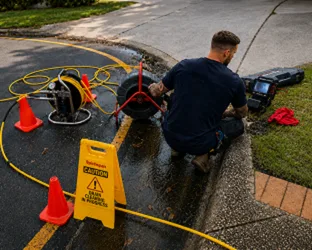
Stop the water, make the area safe, find the cause. Only then does a price get put in front of you, and nothing starts until you have agreed it.

Finished on the night wherever the parts allow. Where they do not, you are left watertight and usable, with the return booked before we leave.
Call and describe it. If it can hold, we will tell you, and book you at daytime rates. If it cannot, you will be glad you rang tonight.
Phone is quickest at night. The form works too and reaches the crew covering Narrabeen rather than a national call centre.

Leave your details and our local Narrabeen team will call you back fast.